When a company asks us for 'a coffee break for 60 people', half the time what they actually need is a welcome coffee — or a brunch. The three formats live in the same corporate catering universe but serve very different occasions. Choosing wrong means overpaying, or worse, leaving guests hungry.
In this guide, based on 20+ years catering for businesses, universities and institutions in Lisbon, we explain how to decide between the three.
The difference in one sentence
- Welcome coffee: a small gesture of welcome at the start of the event (15–20 min).
- Coffee break: a mid-event pause to recharge (20–30 min).
- Corporate brunch: replaces a meal (60–90 min).
Welcome coffee: the event's appetiser
The welcome coffee greets guests arriving at slightly different times and gives latecomers a buffer. It's light by design — not meant to satisfy, meant to set the tone.
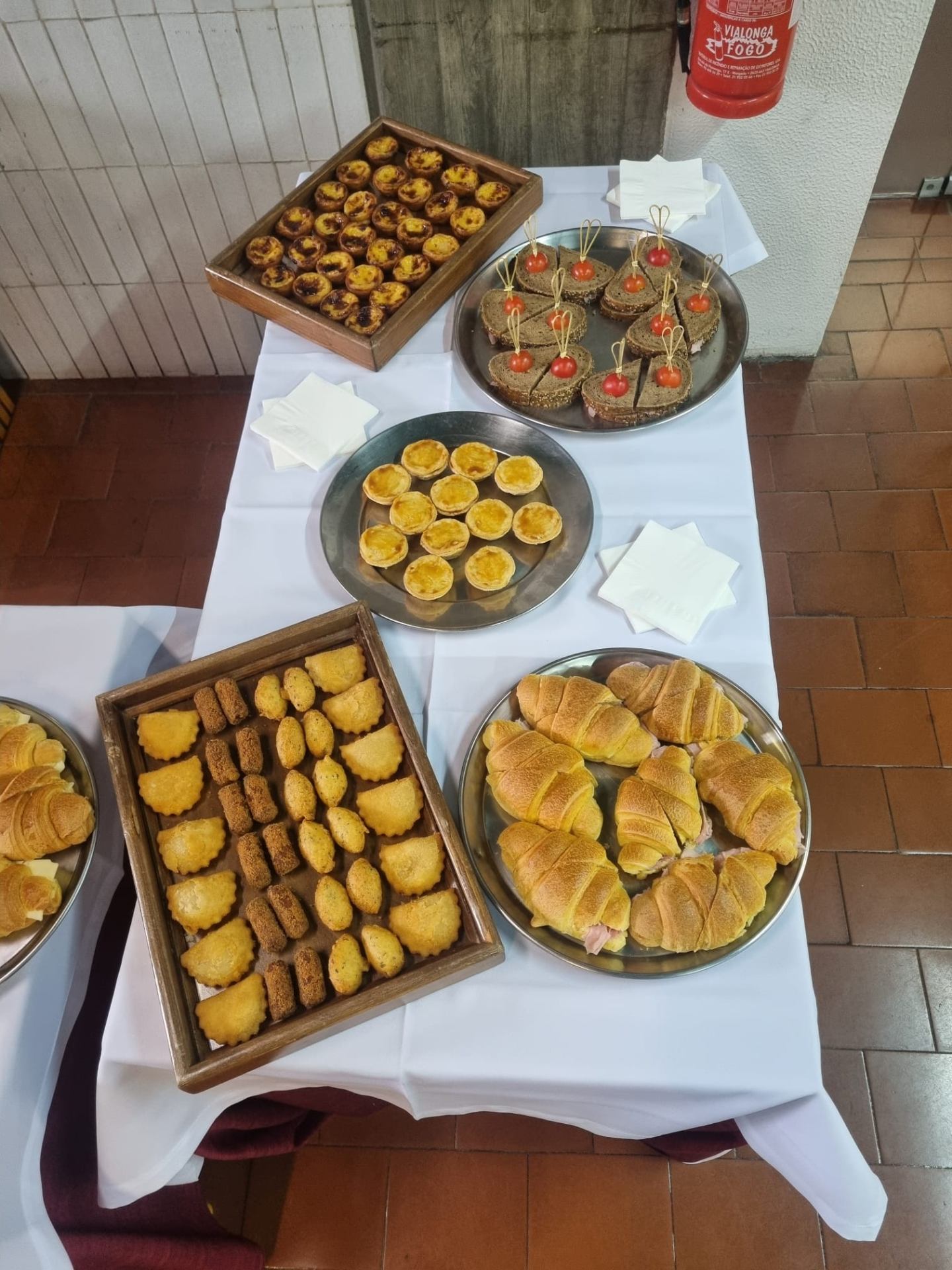
Typical menu: coffee, tea, water, fresh orange juice, pastéis de nata, maybe sweet mini-toasts. Served standing, usually outside the meeting room. Ideal length: 15–20 minutes before the official start.
When it makes sense: kick-offs, product launches, morning conferences, external client meetings.
Coffee break: the energy pause
The most requested format — and rightly so. The coffee break cuts a long agenda in half, gets people up and chatting informally, and brings them back sharper.
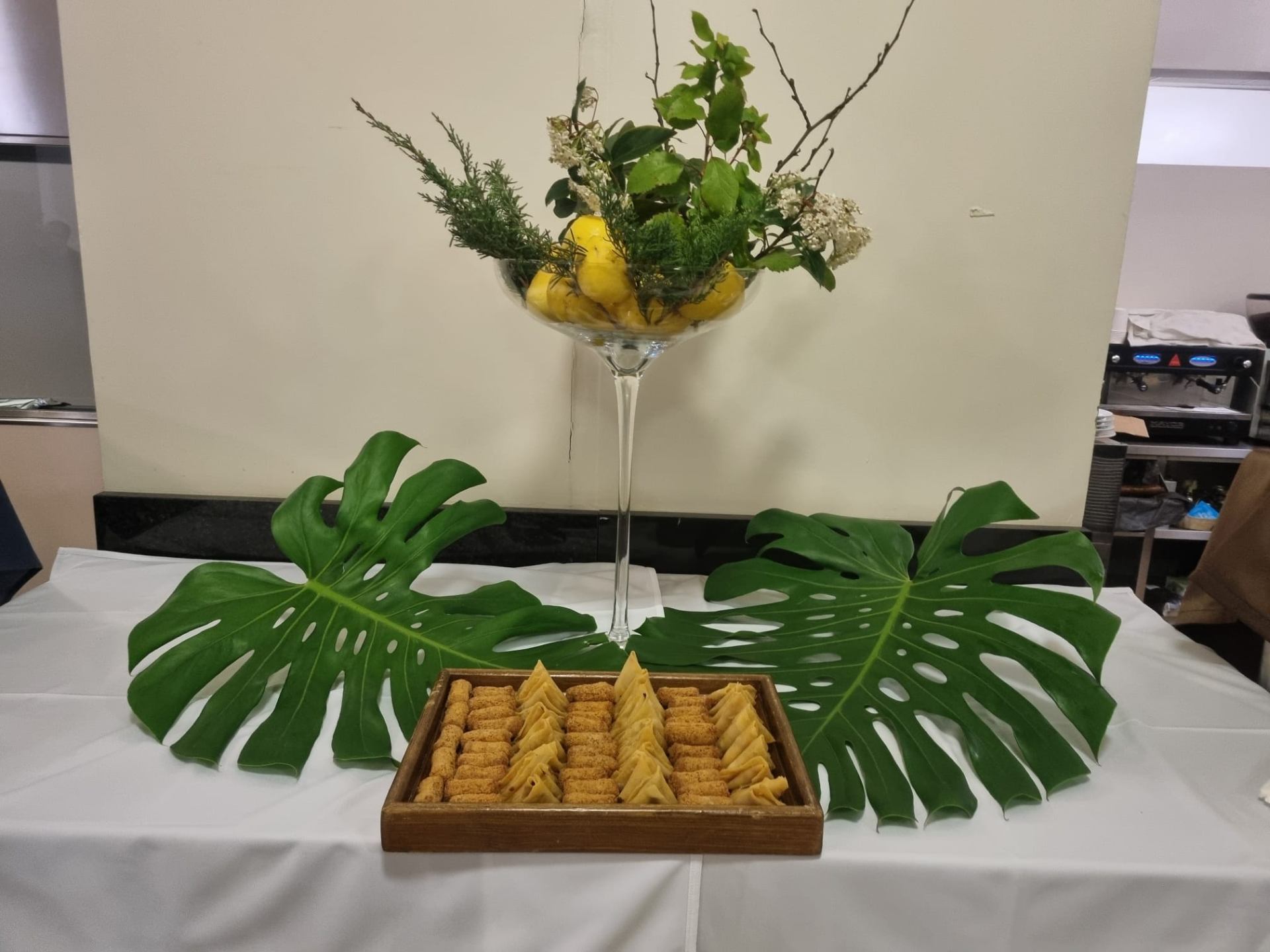
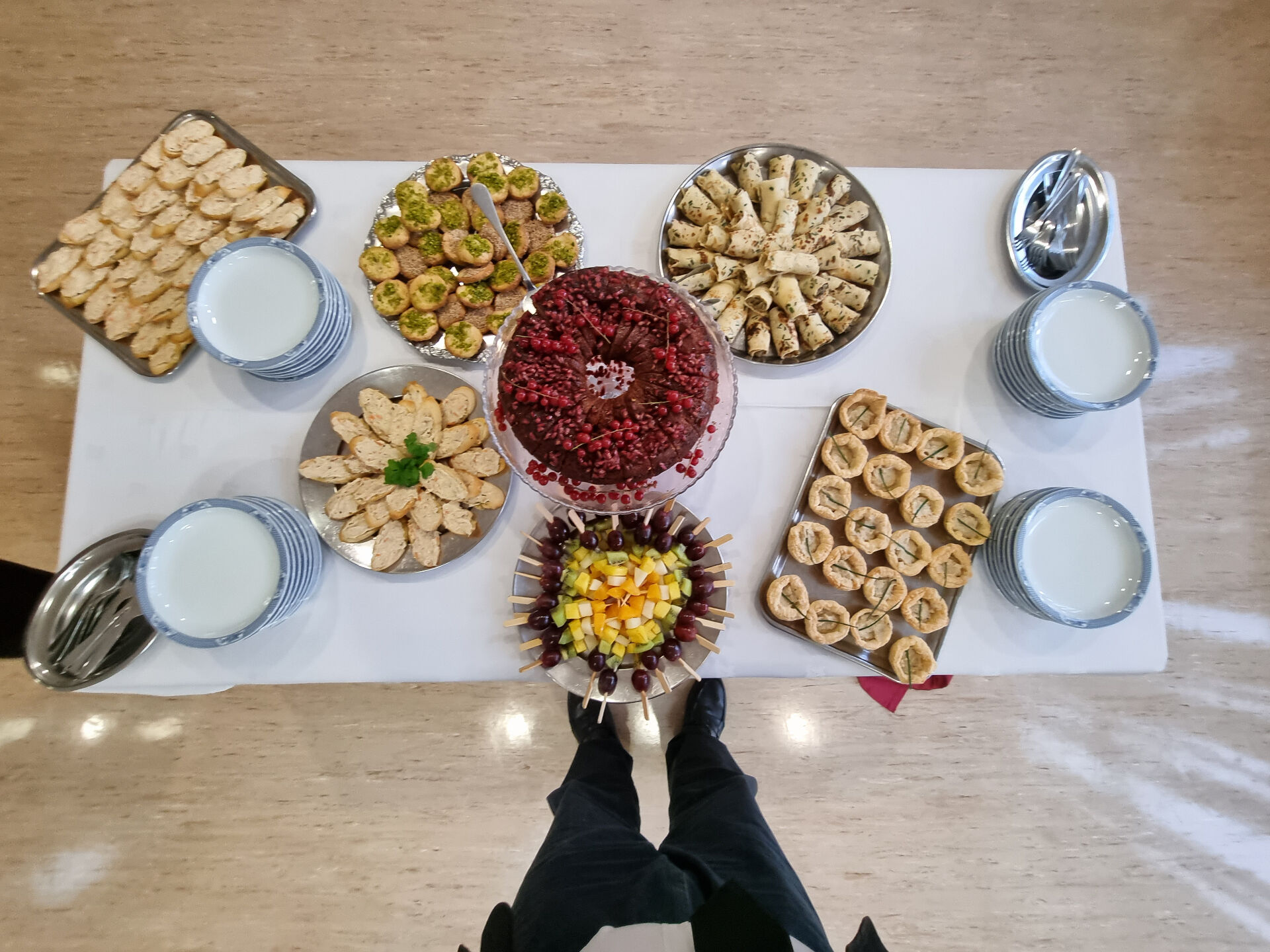
Typical menu: coffee, tea, juices, water, mini-sandwiches (mixed, chicken, vegetarian), warm savouries, pastéis de nata, cut fruit, gluten-free option. Our rule of thumb: 2 sweet + 1 savoury items per person for a 30-min break.
When it makes sense: half-day or full-day training, conferences, workshops, long meetings. Served mid-morning (~10:30) or mid-afternoon (~16:00).
Corporate brunch: the relaxed meal
Brunch replaces breakfast or lunch and is the right call when the event starts early (9–10am) and runs past noon. It needs to be substantial.
Typical menu: scrambled eggs or quiches, smoked salmon, charcuterie, cheeses, assorted bread, granola, yogurts, fruit, pastries, fresh juices, coffee and tea. Can be served buffet style or at round tables.
When it makes sense: shareholder meetings running late, Saturday events, corporate retreats, launches with guests travelling in.
Quick decision table
- Event lasts 1h and you just want to welcome guests? → Welcome coffee.
- Event lasts 4h+ and needs a break? → Coffee break.
- Event starts in the morning and runs through lunch? → Brunch.
- Afternoon event, 2–3h, with a pause? → Coffee break (afternoon version).
- Short client meeting, <2h? → Welcome coffee is enough.
The right question isn't 'how much does it cost', it's 'how long does the event last and what happens between guests arriving and leaving'.
Common mistakes we see
- Serving brunch when a coffee break would do — wasted budget and food.
- Serving only welcome coffee at a 6-hour event — guests end up starving and unfocused.
- Forgetting vegan/gluten-free options — in any event >30 pax there's always someone with restrictions.
- Wrong timing — a coffee break at 11:45 is too late (people are already thinking about lunch).
Real case: tech company, full-day training, 80 pax
Recommendation: light welcome coffee (10 min) + mid-morning coffee break + corporate lunch + short mid-afternoon coffee break. Total: ~€25/person, comfortable schedule, no one hungry at any point. This is what we regularly serve at University of Lisbon training sessions and at offices in Saldanha and Marquês.
Why this matters for Lisbon-based companies
The Portuguese corporate calendar concentrates events between October and December (year-end conferences, awards, kick-offs) and again between March and May. In those windows, our delivery slots fill up two weeks in advance — and the wrong format choice becomes harder to fix because suppliers get booked. International companies with offices in Saldanha, Marquês or Parque das Nações often default to the brunch format they know from London or Berlin, when in fact a Portuguese coffee break (warm savouries plus pastéis de nata) is both cheaper and culturally closer to what local guests expect mid-morning.
Our advice for English-speaking event managers in Lisbon: when in doubt, ask the venue what time guests will be arriving and how long they'll stay seated. That single answer eliminates two of the three options.
Next step
Not sure which format is right for your event? Tell us start time, end time and guest count — we'll suggest the most cost-effective fit.